Dear Caregivers,
Caregiving is a challenging yet deeply rewarding experience. Having cared for my mother for more than six years, I know how important your job can be. Caregviers play an essential role; one that sometimes does not receive the appreciation it deserves. Some caregivers work around the clock providing care to loved ones like I did with my mom. Others provide support for a set period of time each week, others from a long-distance. Regardless of your role, please know that you are so very important, and that you are not alone. There are millions of people providing care for a loved one and there are people who you can turn to for support.
As my mother's Alzheimer's Disease progressed, I experienced both trials and tribulations. I was blessed with a wonderful mother and I never regretted caring for her. Throughout her illness, my mother maintained her comedic personality. She made me laugh each day, and I consider it an honor to have cared for my mother, my best friend. When her illness presented an obstacle, I sought help from family, friends and the community. My family helped when I called on them for something. I prayed for peace and acceptance when my mom refused to eat. Neighbors, friends and our church community visited, offering their comfort. And, when my mom seemed to be nearing the end of life, I turned to Arbor Hospice. They provided me with additional support and ensured my mom's medications and supplies were delivered right to my door.
I know this is not what all caregivers experience. Sometimes, caregiving can be too much to handle. Other times, caregivers do not have a community of support like I did. I encourage you to let go of the things you cannot control. No matter how much you wish to make the disease go away, sometimes you cannot. Finding peace with that may be a short or long journey. It is important to remember that like you, your loved one cannot control his/her disease. I treated my mom like nothing was wrong; I talked to her the same way I did before Alzheimer's Disease. I remembered that it was the disease that affected my mom's memory. In her heart, she knew who I was.
Remember that you cannot neglect yourself. You have to share the love you are giving with yourself. It is much easier for your own needs to be buried in your "to do" list. You are taking on a large share of responsibility for not only yourself, but another person. If you wear yourself out, you will not be of any help to your loved one. Seek support from family, friends, neighbors and your community. And always remember that you need not be alone.
Sincerely,
Rosemarie Gray
Rosemarie Gray is the daughter of one of the thousands of patients Arbor Hospice cares for each year. Thank you Rosemarie for sharing your story and advice to the millions of other caregivers throughout the country.

Thursday, April 3, 2014

Tuesday, April 1, 2014
The Importance of Advance Care Planning
Do you know what healthcare treatments you would and would not want if you could not speak for yourself? Do other people know what your wishes are? Would you know what your loved one would want?
In our work with patients at end-of-life, we have learned that this time period can be meaningful and rewarding. Too often, however, it is a frantic time for families who are asked to make decisions that they are uncomfortable making because they do not have this experience. Only 30 percent of Americans have an advance directive, even though they can be created relatively easily, for free, and without a lawyer. Advance directives give you the ability to document the types of healthcare you do and do not want, and to name an "agent" to speak for you if you cannot speak for yourself.
Communication and preparation are very importance at the end-of-life. Part of our mission at Arbor Hospice is to educate the community about advance directives and end-of-life issues. Our goal is to help spouses, partners, doctors and patients and parents and children to initiate important conversations and document wishes.
Advance care planning is especially important for those of the "sandwich generation." Those who care for their aging parents while supporting their own children are often forced to make decisions not knowing what their loved ones really wanted, because it was never brought up.
 It's never too early to talk to your family, friends and doctor about how you want to be treated if you become seriously ill. National Healthcare Decisions Day, a day dedicated to encouraging people to talk about their end of life wishes celebrated every year on April 16, is approaching. Use this time to think about your own wishes and begin conversations with family and friends. It's the most important gift you can give your loved ones.
This blog post was written by Jaclyn Klein, Arbor Hospice Communications Specialist. You may contact Jaclyn by commenting below or emailing her at jklein@arborhospice.org.
In our work with patients at end-of-life, we have learned that this time period can be meaningful and rewarding. Too often, however, it is a frantic time for families who are asked to make decisions that they are uncomfortable making because they do not have this experience. Only 30 percent of Americans have an advance directive, even though they can be created relatively easily, for free, and without a lawyer. Advance directives give you the ability to document the types of healthcare you do and do not want, and to name an "agent" to speak for you if you cannot speak for yourself.
Communication and preparation are very importance at the end-of-life. Part of our mission at Arbor Hospice is to educate the community about advance directives and end-of-life issues. Our goal is to help spouses, partners, doctors and patients and parents and children to initiate important conversations and document wishes.
Advance care planning is especially important for those of the "sandwich generation." Those who care for their aging parents while supporting their own children are often forced to make decisions not knowing what their loved ones really wanted, because it was never brought up.
It's never too early to talk to your family, friends and doctor about how you want to be treated if you become seriously ill. National Healthcare Decisions Day, a day dedicated to encouraging people to talk about their end of life wishes celebrated every year on April 16, is approaching. Use this time to think about your own wishes and begin conversations with family and friends. It's the most important gift you can give your loved ones. This blog post was written by Jaclyn Klein, Arbor Hospice Communications Specialist. You may contact Jaclyn by commenting below or emailing her at jklein@arborhospice.org.
Monday, March 24, 2014
Communicating With A Friend Who Is Dying
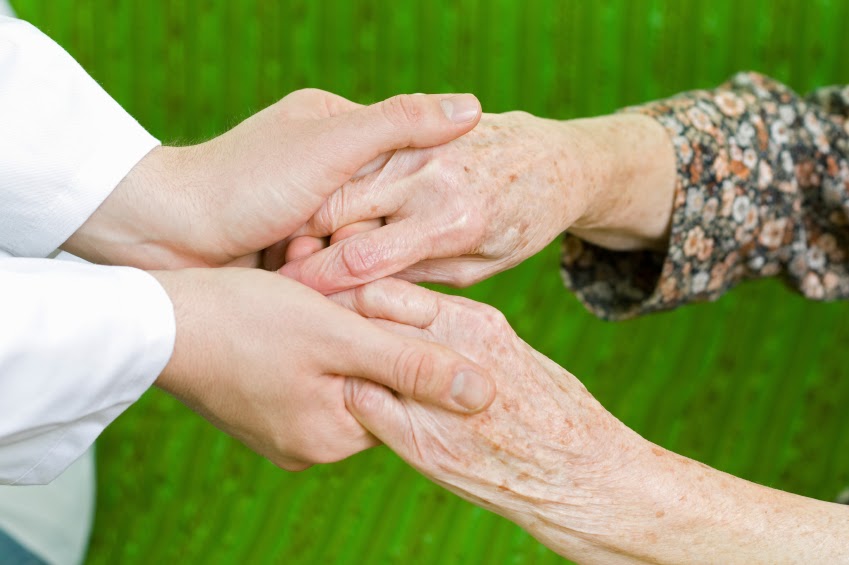 Talking to people with a terminal diagnosis can be uncomfortable. It is natural to come up blank on what to say at such an emotional time. People hesitate to reach out because they do not want to upset friends and/or family members, but you are really needed now, more than ever. So take a soft approach, listen, and let your friend take the lead on the conversation.
What do you say to people who know their time is limited? Arbor Hospice Spiritual Care Coordinators offer these suggestions:
- Be with them physically. Presence is often more important than finding the right words to say. As death approaches, your friend may not want to speak. Holding their hand, reading or just being present is often reassuring.
- Talk about the past and things you two did together. Go down memory lane, revisiting a particular joyful or humorous experience, or ask for some stories from the past, as a way to remember. Even though fate cannot be changed, you can positively impact the days that are remaining. Make the moments count. Even if a response is unlikely, the friend will be encouraged by a good memory.
- Thank your friend for his/her companionship. Assure your friend of your continued support and care for his/her family.
- Offer words of comfort such as:
- I care about you deeply. I am so sorry. Is there anything I can do for you?
- You are a dear friend and I will never forget you.
- Your friendship has meant so much to me. I would not be the person I am today without you.
- I want you to know that I love you and that you will always be with me.
- Thank you for being such an amazing friend. You have always helped me when I needed a hand. I will never forget that.
Remember that you can start a conversation with the person who is dying. Make them feel good about themselves, bring peace between the two of you and reassure them that they have a good soul.
Tell me about your experiences with a loved one facing the end of life. What did you say? What did you do?
This blog post was written by Jaclyn Klein, Arbor Hospice Communications Specialist. You may contact Jaclyn by commenting below or emailing her at jklein@arborhospice.org.
Wednesday, March 19, 2014
Music Like No Other
 The Threshold Choir is not your ordinary choir, and Arbor Hospice has the pleasure of hosting them for patients and families. This choir shares a gift of a cappella music with hospice patients at their bedsides at The Residence of Arbor Hospice and in homes throughout the area. Using soft, harmonized voices to offer peace and relaxation during a significant and challenging stage in life, the Threshold Choir touches the lives of patients and their families.
Eight choir members have become Arbor Hospice volunteers, frequently visiting The Residence. They create a serene and beautiful setting for those who are going through the end-of-life experience, bringing comfort and peace.
The Threshold Choir has more than 150 songs in its repertoire. Songs are original and generally non-religious based, written by Threshold Choir members from around the globe. No instruments are used, only the melodic sound of their voices.
Music reaches deep into the spirit of people. Research has shown that patients who are actively dying are more relaxed and have decreased anxiety with this form of music therapy. Their blood pressure, heart rate and pulse decreases, breathing becomes deeper, brain waves slow down and body tension is reduced. All of this helps to create a peaceful transition.
Arbor Hospice is grateful to the Threshold Choir members who regularly bring the gift of music to our patients.
If you were nearing the end of your life, what kind of music would you want to hear?
Thursday, March 13, 2014
Everyone Has A Story To Tell...
Humans are storytellers.
We seem hardwired to both create stories and to tune in to those of others.
Everyone has a story to tell, a story about the people and events that shaped their lives, about what they have observed and experienced in their lifetimes.
Through our stories, we demonstrate that we have had a lifetime that mattered and become immortal as the events and lessons of our lives are handed down through the generations.
Unfortunately, we too often only realize the importance of such stories when our elders are no longer with us. To prevent such regrets:
Stories preserved in the voices of those who come before us are a priceless gift to future generations, a gift that we can offer by paying attention and preparing for the many opportunities that will inevitably present themselves.
This blog post was written by Dennis Sparks, Arbor Hospice volunteer. You may contact Dennis by commenting below or emailing him at thinkingpartner@gmail.com.
We seem hardwired to both create stories and to tune in to those of others.
Everyone has a story to tell, a story about the people and events that shaped their lives, about what they have observed and experienced in their lifetimes.
Through our stories, we demonstrate that we have had a lifetime that mattered and become immortal as the events and lessons of our lives are handed down through the generations.
Unfortunately, we too often only realize the importance of such stories when our elders are no longer with us. To prevent such regrets:
- Listen for stories. They are often all around us, told on porches and in kitchens as we prepare food and share meals.
- Don't be shy about inviting elders to share stories, particularly those who tend to be quiet and introverted. They may decline, but it is better to have asked than to later regret not having tried.
- Whenever possible, record family stories on ever-present smart phones and tablets. The opportunity may not come again. Later, they can be transferred to computers and edited by tech-proficient family members. Even low-quality video and audio recordings are better than nothing.
Stories preserved in the voices of those who come before us are a priceless gift to future generations, a gift that we can offer by paying attention and preparing for the many opportunities that will inevitably present themselves.
This blog post was written by Dennis Sparks, Arbor Hospice volunteer. You may contact Dennis by commenting below or emailing him at thinkingpartner@gmail.com.
Tuesday, March 11, 2014
Making It Count With Your Parents
 I saw the movie Nebraska recently and was struck by the younger son's realization on how important it was to his dad to make a lifelong dream come true, no matter how irrational it may have seemed to everyone else. His son originally agreed with his mom, his older brother and everyone else - Dad must have some dementia, doesn't really know what's going on, and is being duped by a particular situation.
How many sandwich generation adults, juggling the responsibilities of everyday life between careers, relationships and children along with caring for aging and ill parents, have faced the same struggle?
This son finally makes the connection that this is what is important to his dad in whatever months, weeks or days he has left in his life. He listens to what his dad always wanted, and then selflessly acts to make sure his dad's dreams are realized. It's a very poignant moment, and one we who struggle with parents who are living out their dreams in ways that may not seem rational or age-apporpirate must come to terms with.
What harm comes from realizing a dream at the conclusion of your life? Can you help a loved one reach that goal during their life journey? My goal would be to have as much impact as the younger son did with his father.
This blog post was written by Gloria D. Brooks, Arbor Hospice President and CEO. You may contact Gloria by commenting below or emailing her at gbrooks@arborhospice.org.
Tuesday, March 4, 2014
Traveling Solo Tips
When individuals lose a loved one who was their primary travel companion, the idea of taking a solo trip can be overwhelming. Adjusting to life after a loved one passes is very difficult. Often times, the death of a loved one requires individuals to take on new challenges. It takes time and patience to get comfortable without your loved one being a part of your daily life.
Whether traveling by air, land or sea, here are some tips to think about before going it alone:
This blog entry was written in conjunction with Arbor Hospice's Workshops for One grief support workshop.
Whether traveling by air, land or sea, here are some tips to think about before going it alone:
- Get comfortable on your own. Before traveling long distance, venture out alone within your community, visiting museums, attending movies or plays or taking a walking tour. This will build your confidence and comfort, and help you rediscover the joy of your favorite activities.
- Start with shorter trips. Visit family or friends within a day's drive and get comfortable with your ability to travel on your own. Notice how many people are also traveling solo and know that you are not alone.
- Find ways to make meal times more enjoyable. If it's especially tough to eat dinner alone, consider having your main meal at lunch when many others are also dining alone and make the evening meal a small one in your room. Eat in hotel restaurants, as there are often a number of solo diners.
- Pack lightly since you will often be carrying your own luggage. Go for your smallest, lightest piece of luggage and only bring items that are essential for your trip. Be sure to pack comfortable shoes and tuck copies of your travel documents in a separate suitcase or bag.
- Safety first. Leave your itinerary with a friend or family member and check in with that person on a regular basis by phone or email.

This blog entry was written in conjunction with Arbor Hospice's Workshops for One grief support workshop.
Subscribe to:
Posts (Atom)